Skylane Manager
Background
People are experiencing traffic and congestion in their cities. They need a better way to commute. The business sees an opportunity in providing aerial ride sharing at scale. A major component to this is planning preset routes.
Problem
The business needs to solve for safety, to gain regulator approval. They need to plan routes that connect with existing transportation infrastructure. And they need to consider the general public, to avoid noise pollution over neighborhoods and businesses. So planning the route is key.
The people in this case are internal users who will do this work. They need a way to define specific paths through space, and set constraints for vehicles to stay within.
Desired Outcomes
Our goal is a user-friendly experience for experts to build and manage a network of Skylanes. And enable decision-making with rich data layers.
Once launched, we would measure Task Success and User Happiness
Process
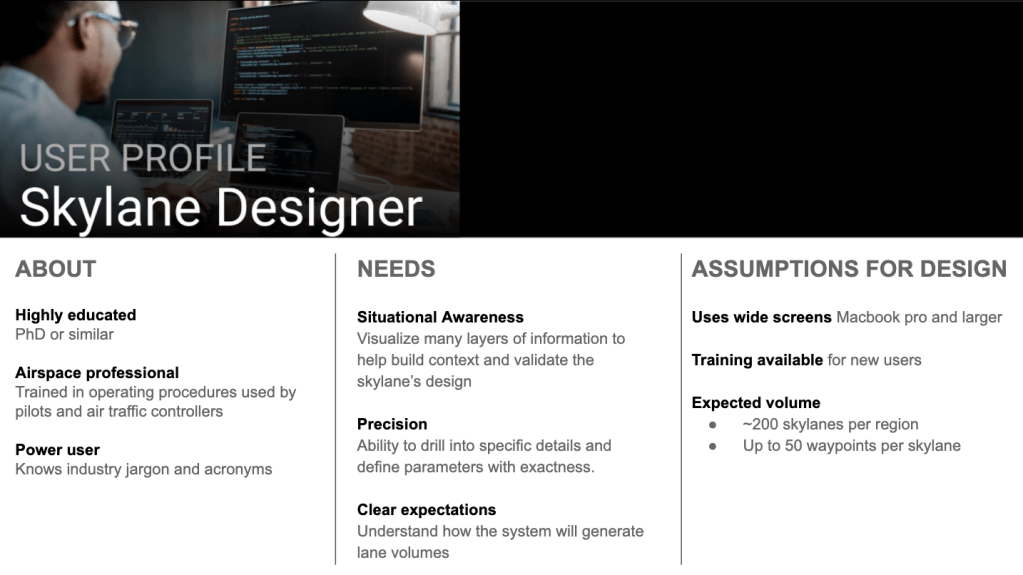
Conducted discovery with intended users to understand their perspectives and challenges. The user is an airspace engineer who needs a tool that can build their confidence that planned routes are safe and valid.
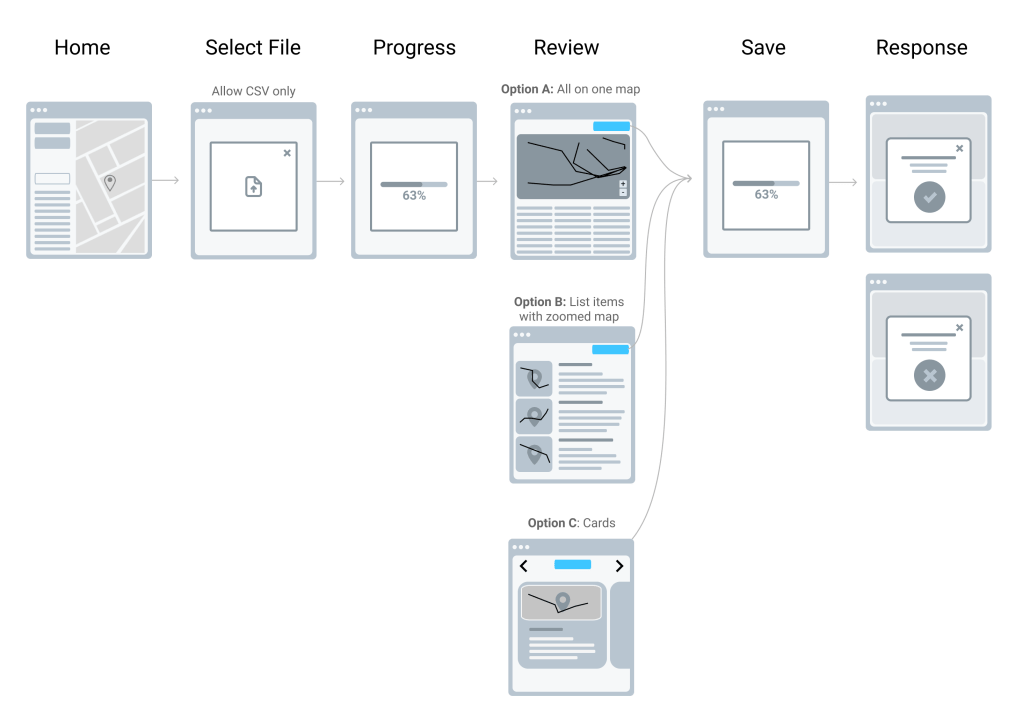
Mapped task flows as a thinking tool, evaluating user options at each step. And also as a visual aid when driving team discussions and alignment. I created screens like these quickly with the help of a Figma plugin.
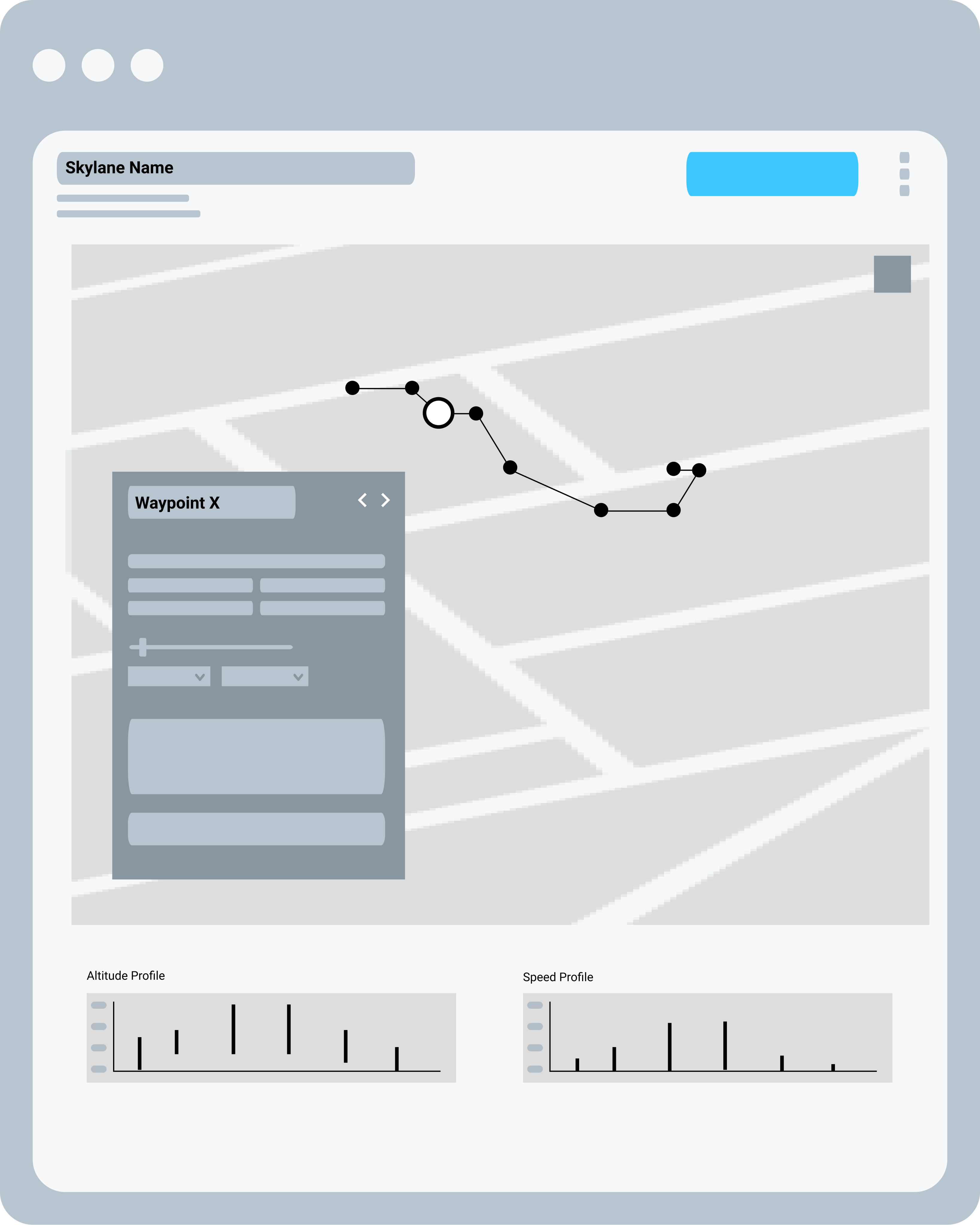
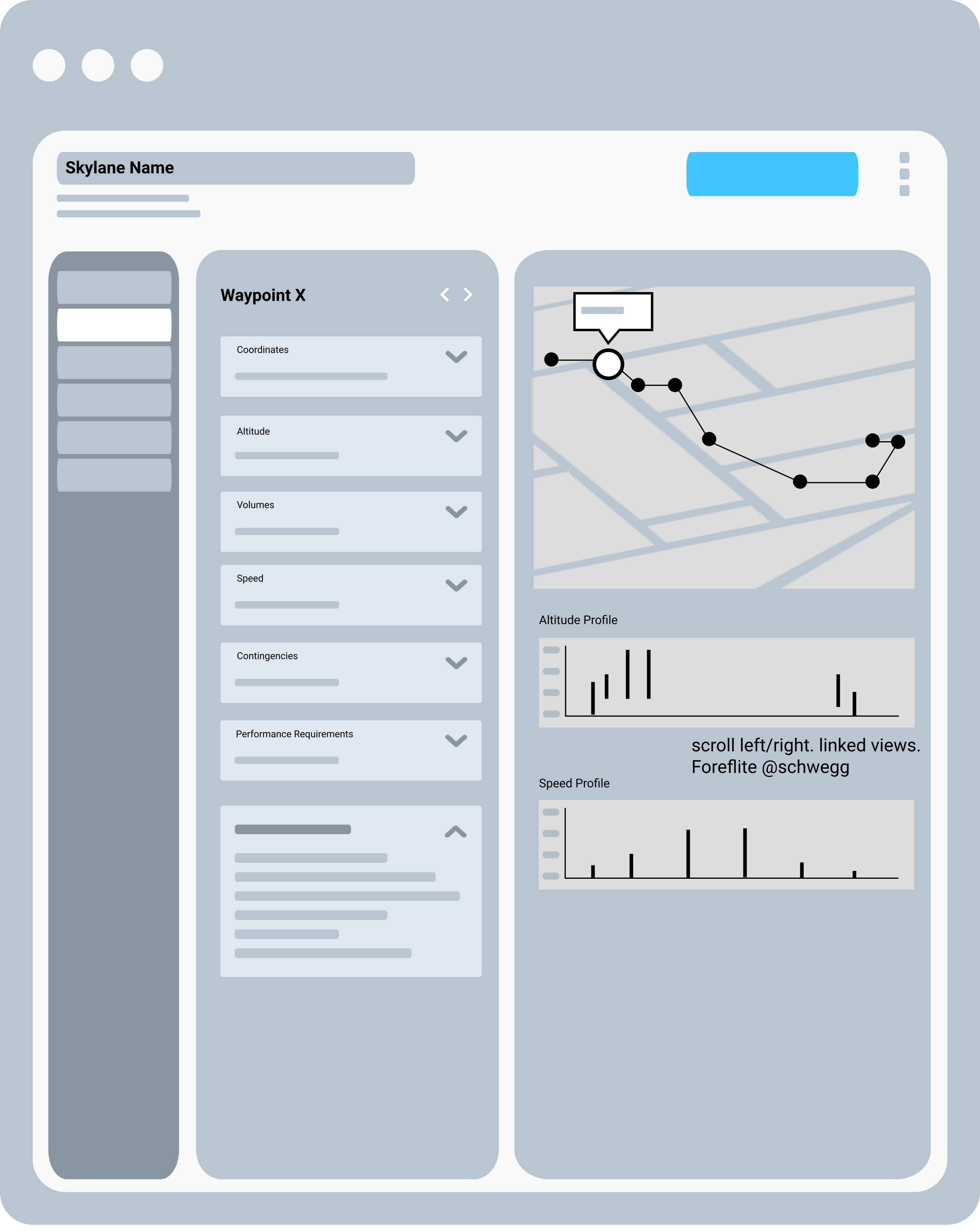
Explored possible layouts in low fidelity and trying to bring divergent ideas to the table. Critiquing these with the team sparked useful feedback which improved the following rounds.
Solution
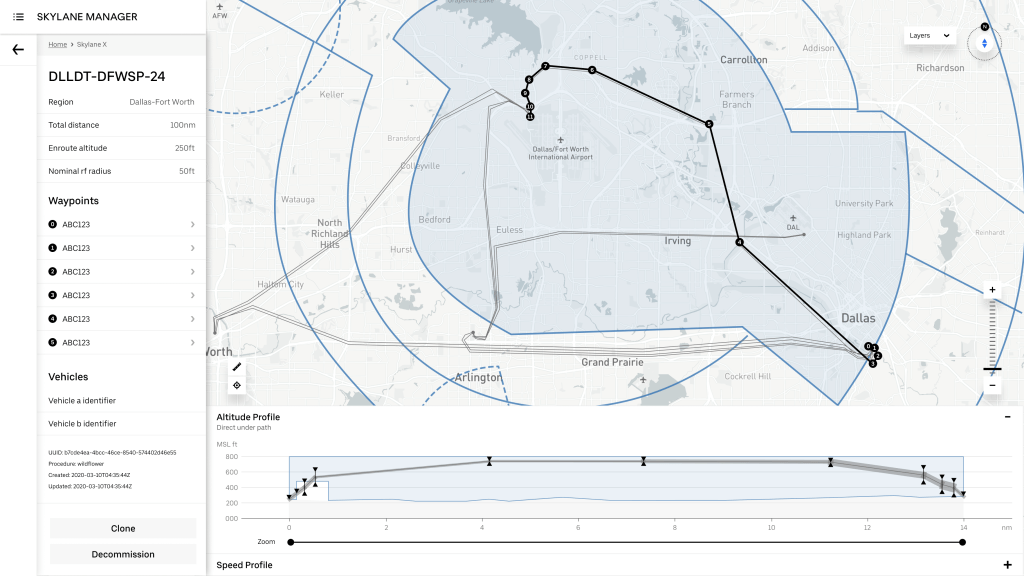
Interface to create, edit, and view Skylanes
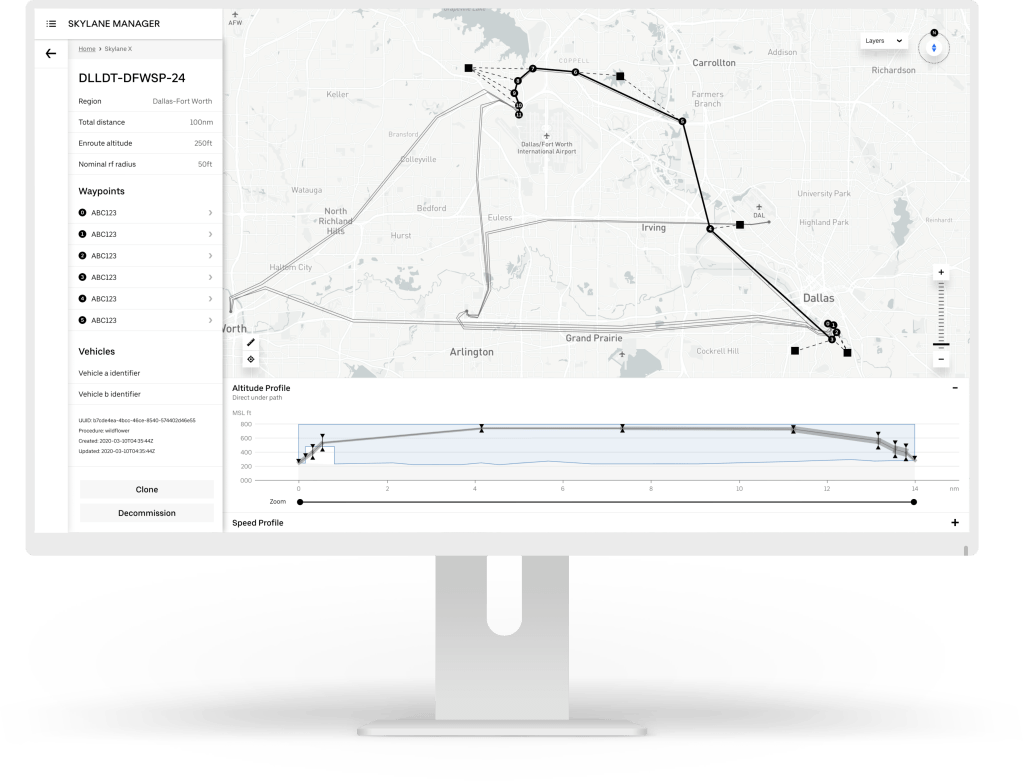
To help focus, we have given nearby lanes a lighter treatment. The blue areas represent FAA controlled airspace zones, and are a critical component adding to the user need of situational awareness. The profile view along the bottom represents altitude trajectory. This chart uses common aeronautical symbology that our expert user will recognize
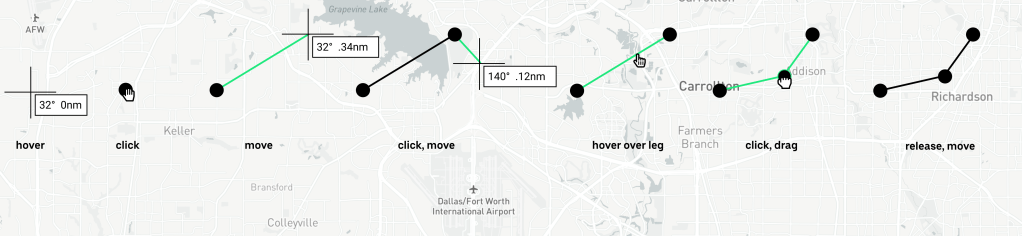
Prototyped map interactions for drawing new routes

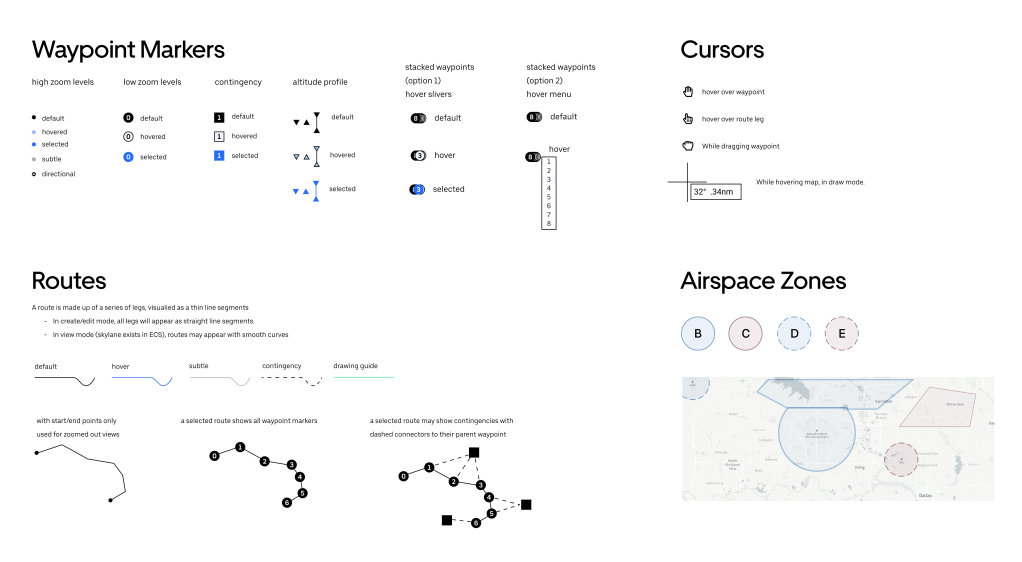
New components for design system
Building a consistent visual language across airspace apps.
Results
Completed design phase (May 2020) with positive stakeholder feedback.
Next steps:
- Support developers
- Design QA
- User tests & survey to measure Task Success and User Happiness

