Pressure Ulcer Prevention
User research and rapid prototyping of medical devices
Background
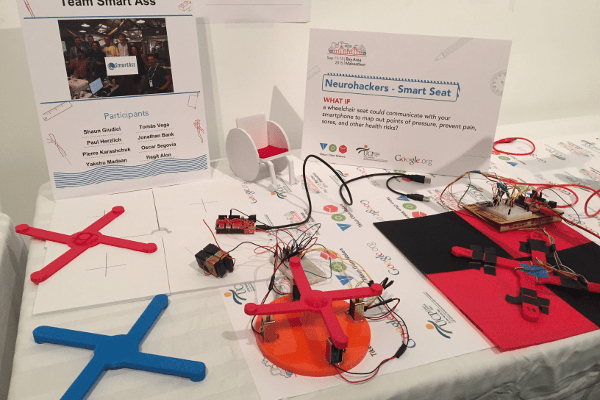
This project was part of the 2015 Bay Area Makeathon hosted by TOM and Google.org. Problem statements were shared in advance and groups formed organically after lightning talks at a kickoff meeting.
Challenge
Current solutions to prevent pressure sores (like ones being used in hospitals) are only passive, such as using soft pillows or monitors to assess pressure.
”Any wheelchair user will tell you that the seat cushion is a critical part of their body/wheelchair relationship. But changes in the body (such as weight, balance, weakness) can create differences in a person’s weight distribution in the seat. Inadequate inflation of a seat cushion or lack of support can lead to a list of dangerous health issues, which are magnified by people who have no sensation in their lower body.”
Desired Outcome
Design and prototype a solution that helps prevent and monitor the risk of sores.
Process
Created a research plan to recruit and interview potential users. Mentored team members on best practices for conducting interviews, and the importance of building empathy.
Recruitment criteria
- People directly affected by the daily challenge of avoiding pressure sores
- Caregivers who are actively assisting people in prevention activities
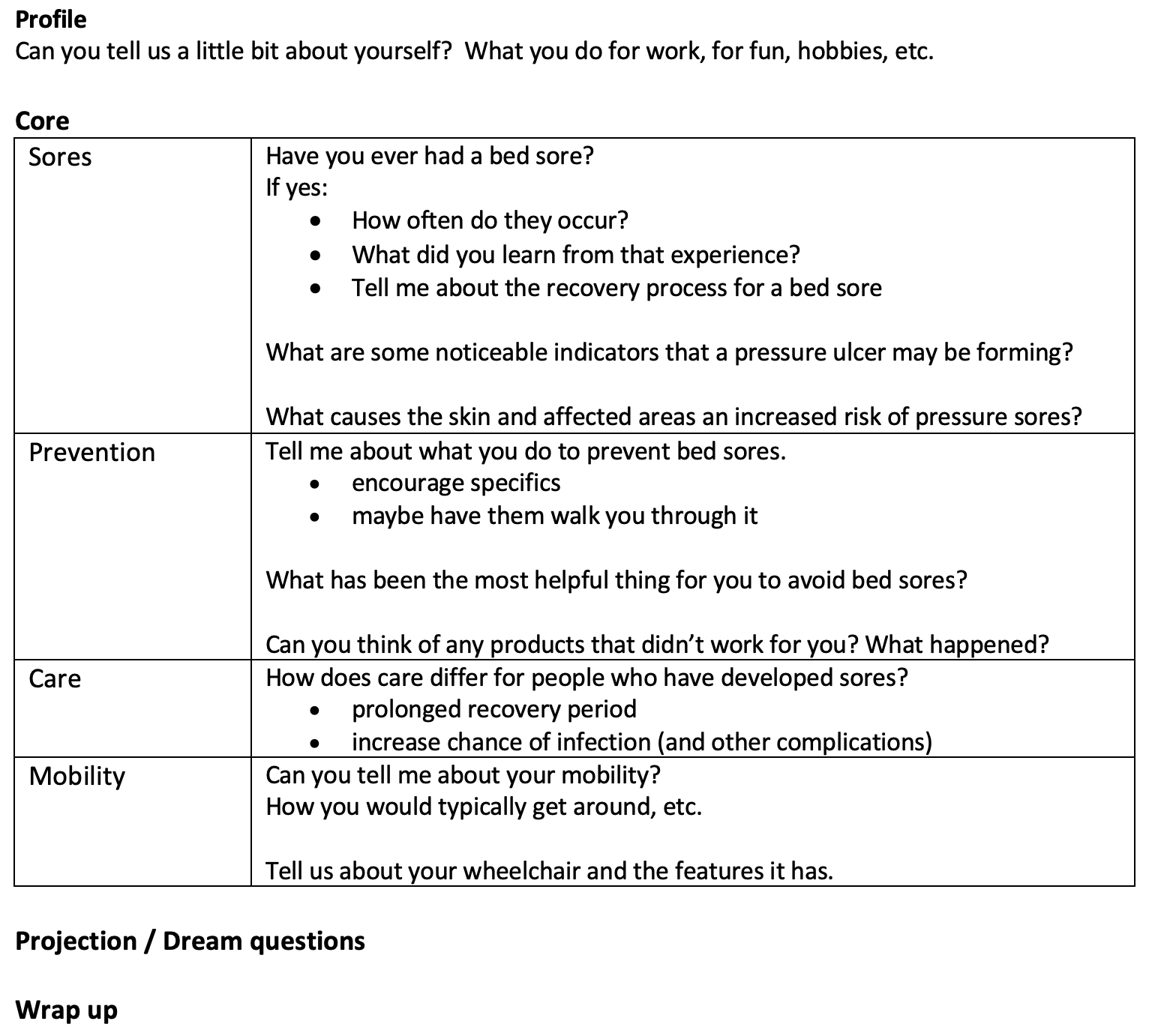
Developed personas to summarize learnings from the research. We identified two distinctly different types of problems: the independent and capable user versus the caretaker dependent user.
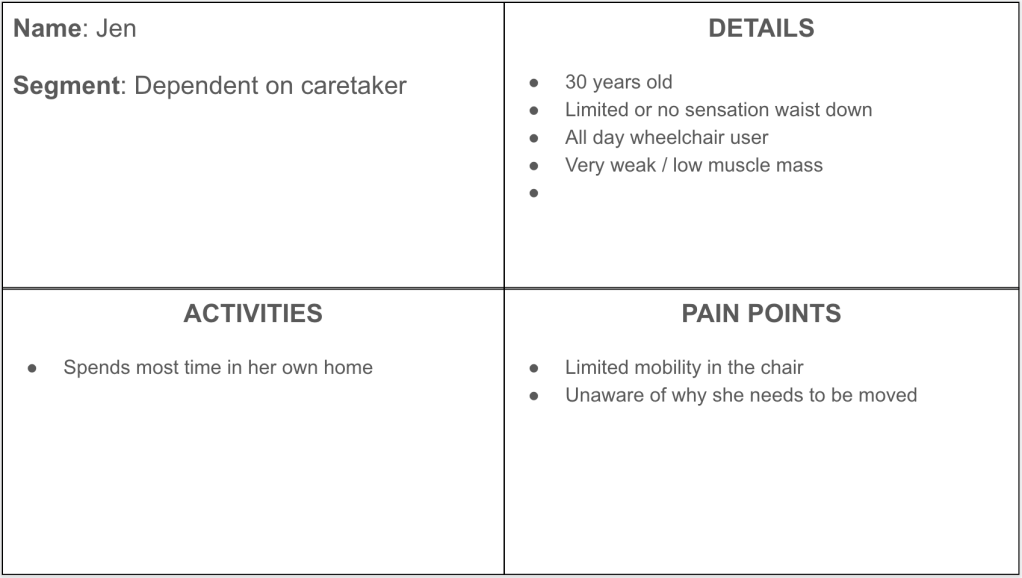
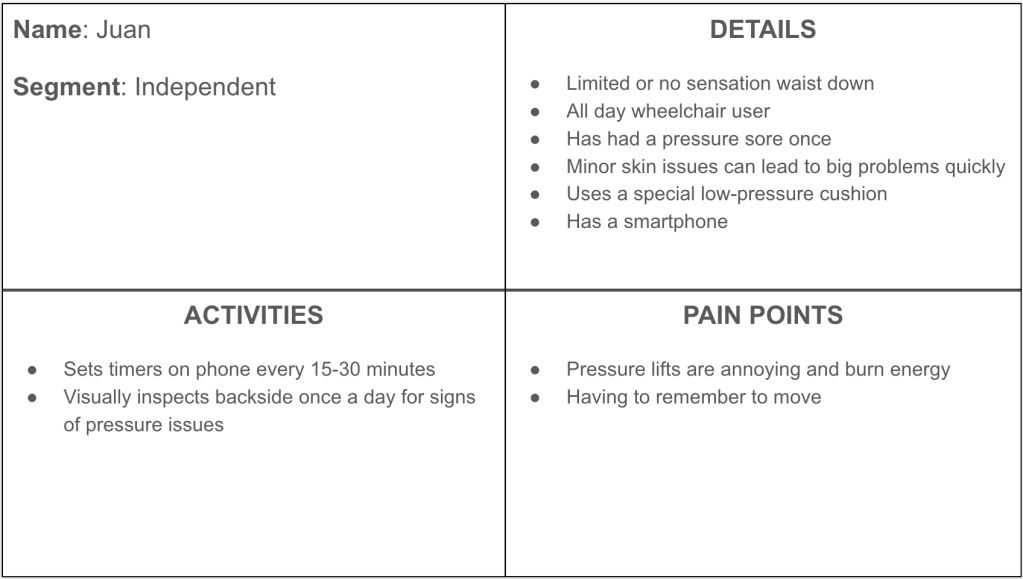
Facilitated empathy workshop to map the themes and patterns observed in the research and build a shared understanding of user stories.
Rapid ideation exercise to generate many ideas in short time.
- 3 minutes to sketch/write. Go for quantity.
- Stack up all the cards, drawing one at a time
- When your card is called, you have 15 seconds to explain the idea to the group
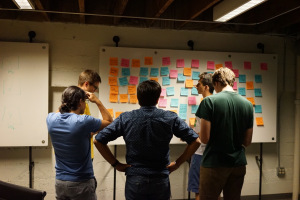
How might we sense pressure issues in a wheelchair seat cheaply and effectively?
Ideation prompt
Creative momentum
Leading up to the Makeathon we explored potential solutions in our free time. We gathered materials, sketched designs, and built quick prototypes to assess feasibility. This helped us collect data around which sensors performed better than others.
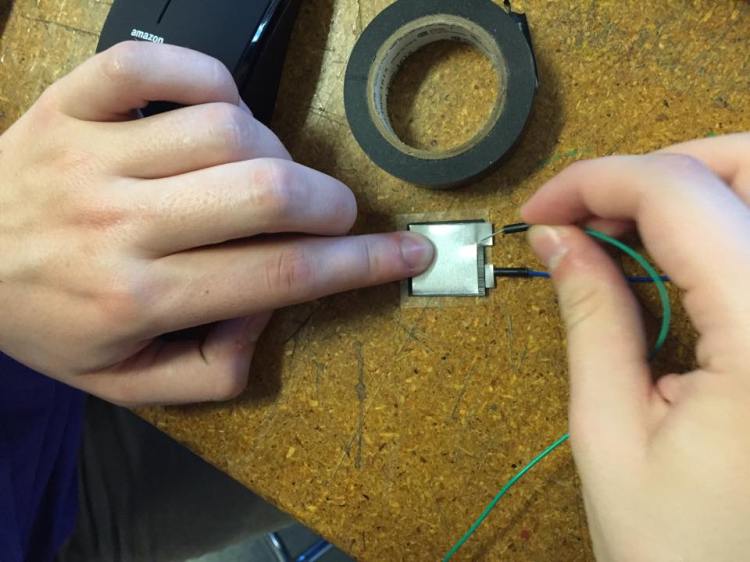
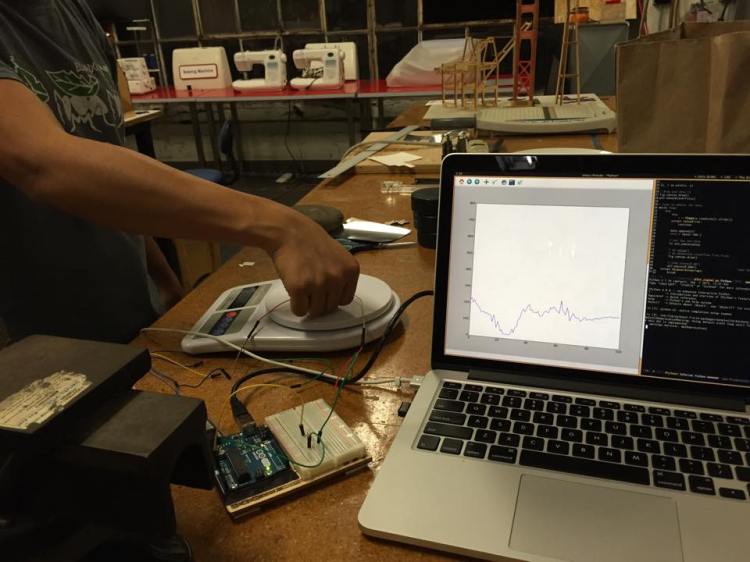
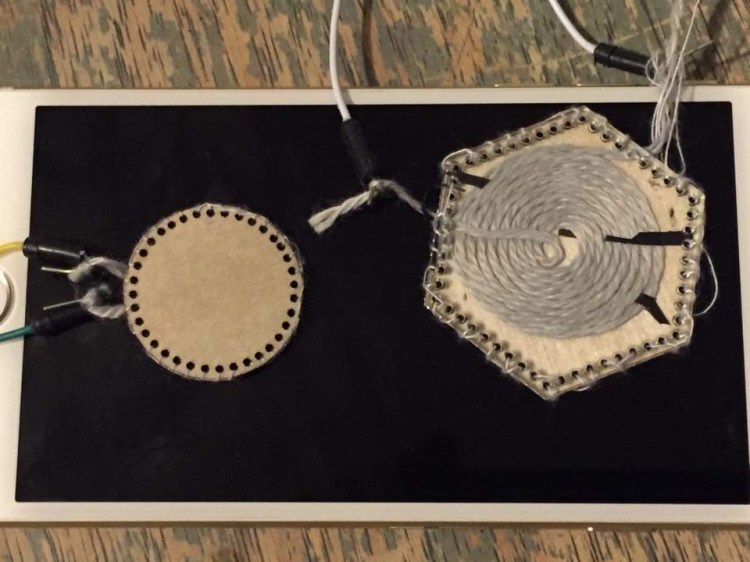
Conductive yarn showed promise as a low-cost, low-profile sensor. 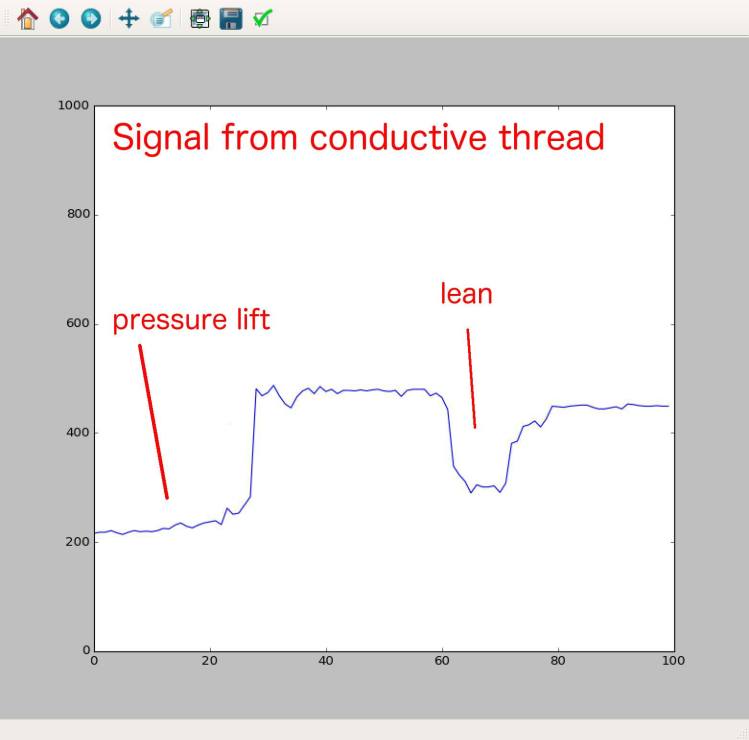
Rapid Prototyping at Makeathon
Over the course of 72-hours we iterated on sensor prototypes, designed and developed a smartphone app, and gathered feedback from the community.
Passive solution
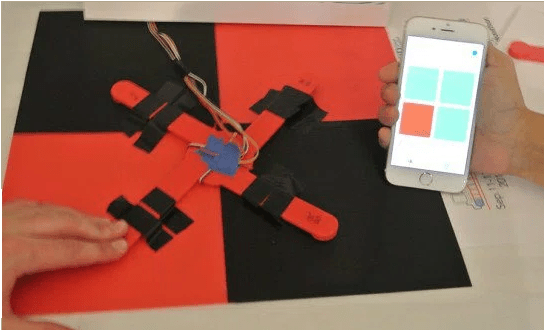
By sensing pressure buildups, we can alert wheelchair users to take corrective action, such as shifting their weight or doing a ‘pressure lift’.
Active solution
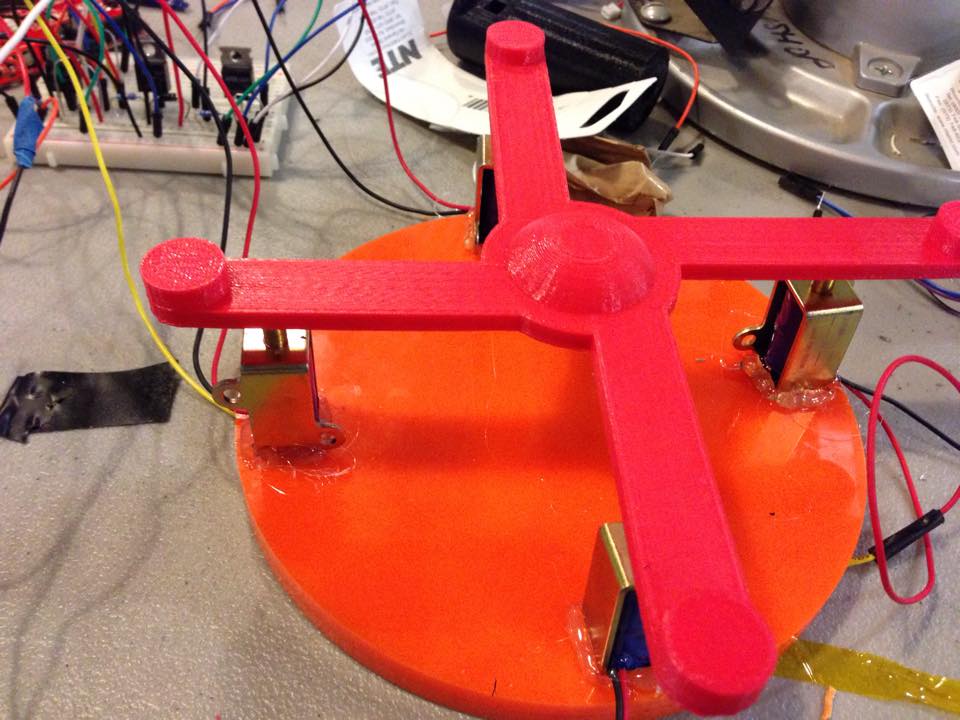
By altering the shape of the seat pad to redistribute weight, we can automatically ease pressure in areas where it has built up.
App concepts
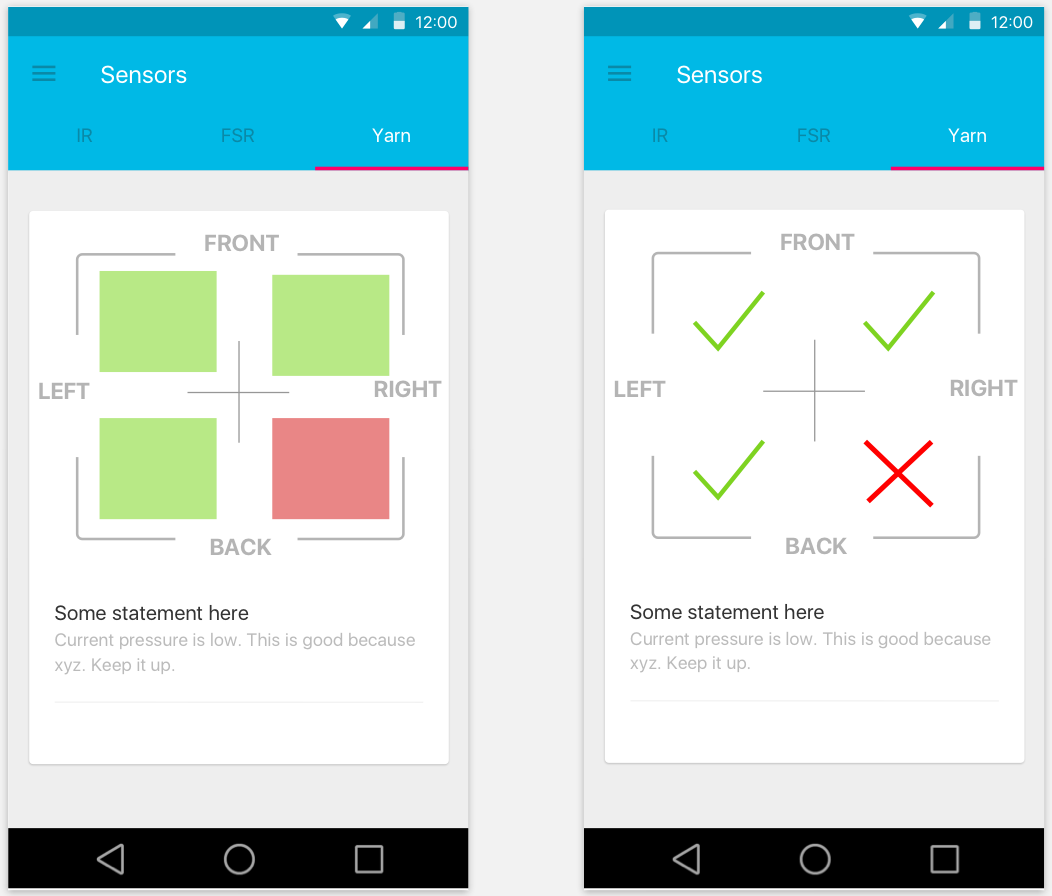
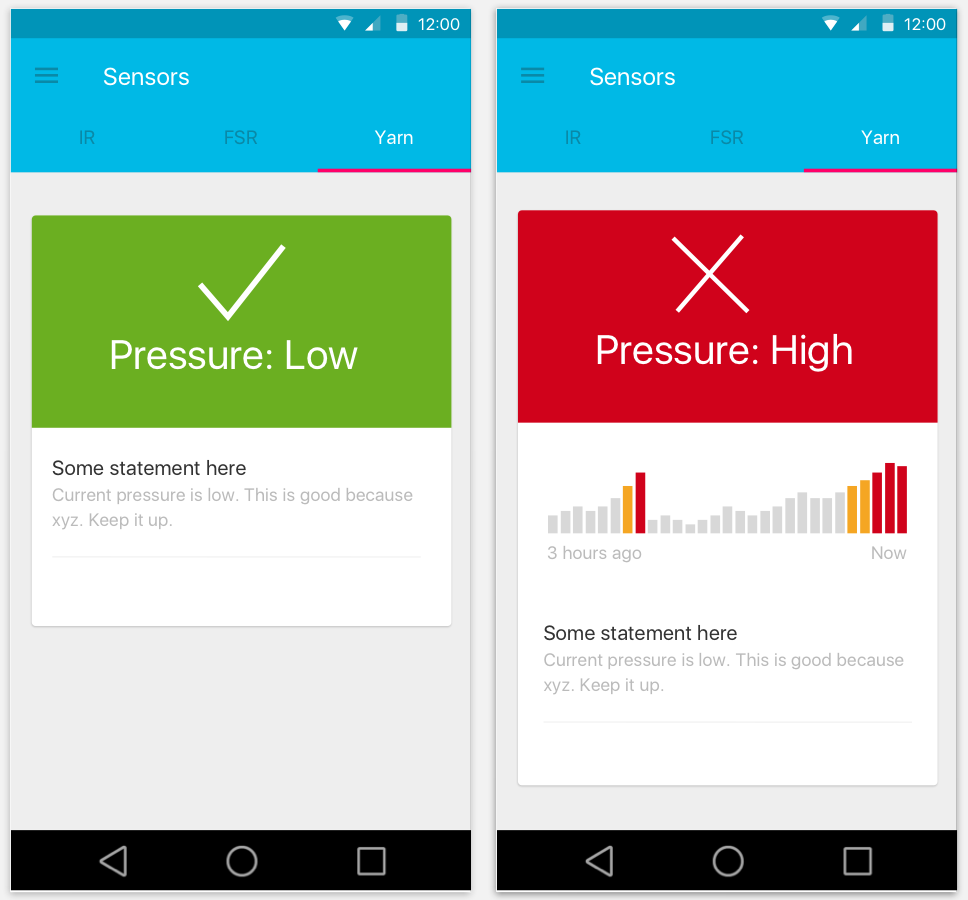
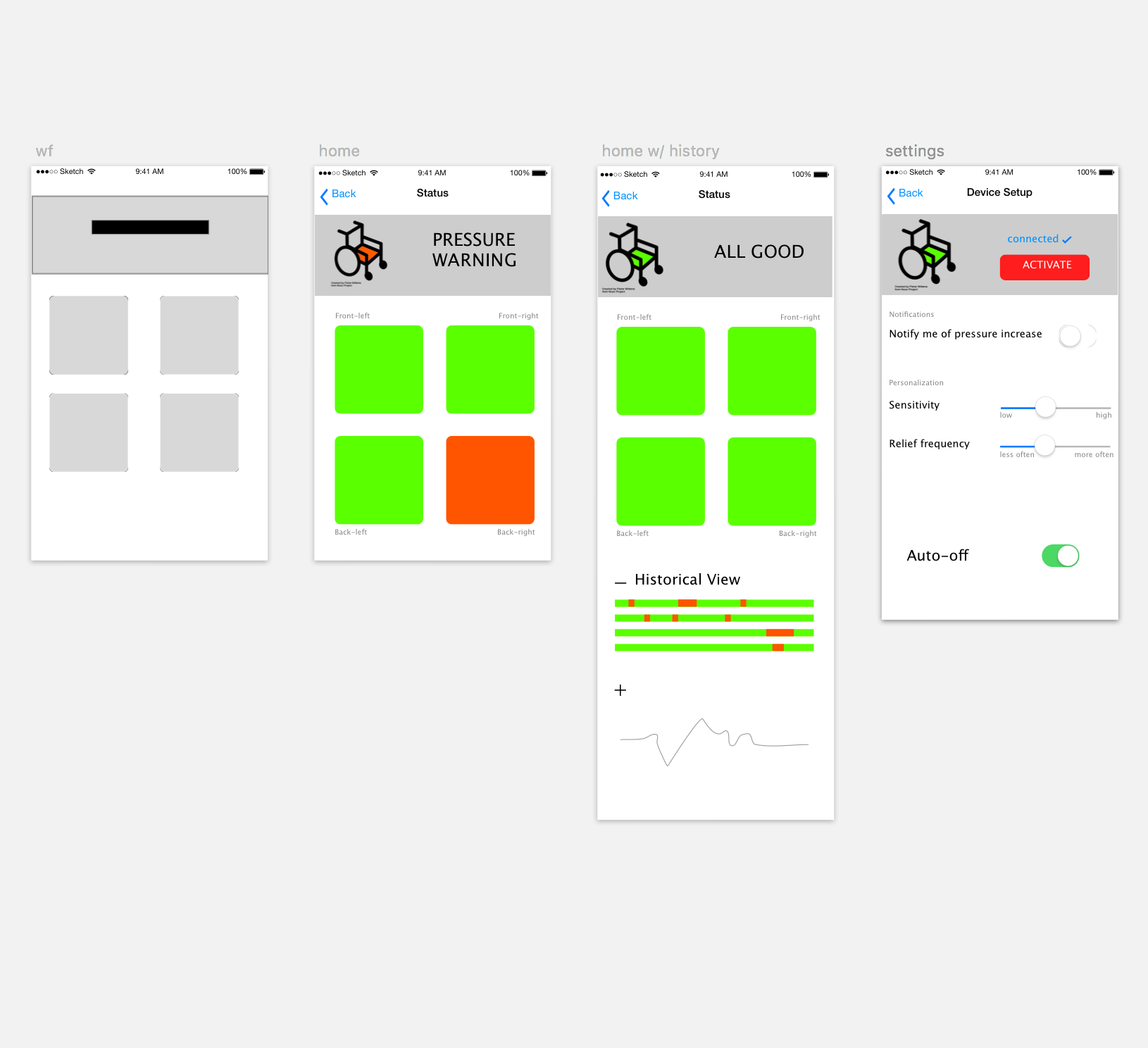
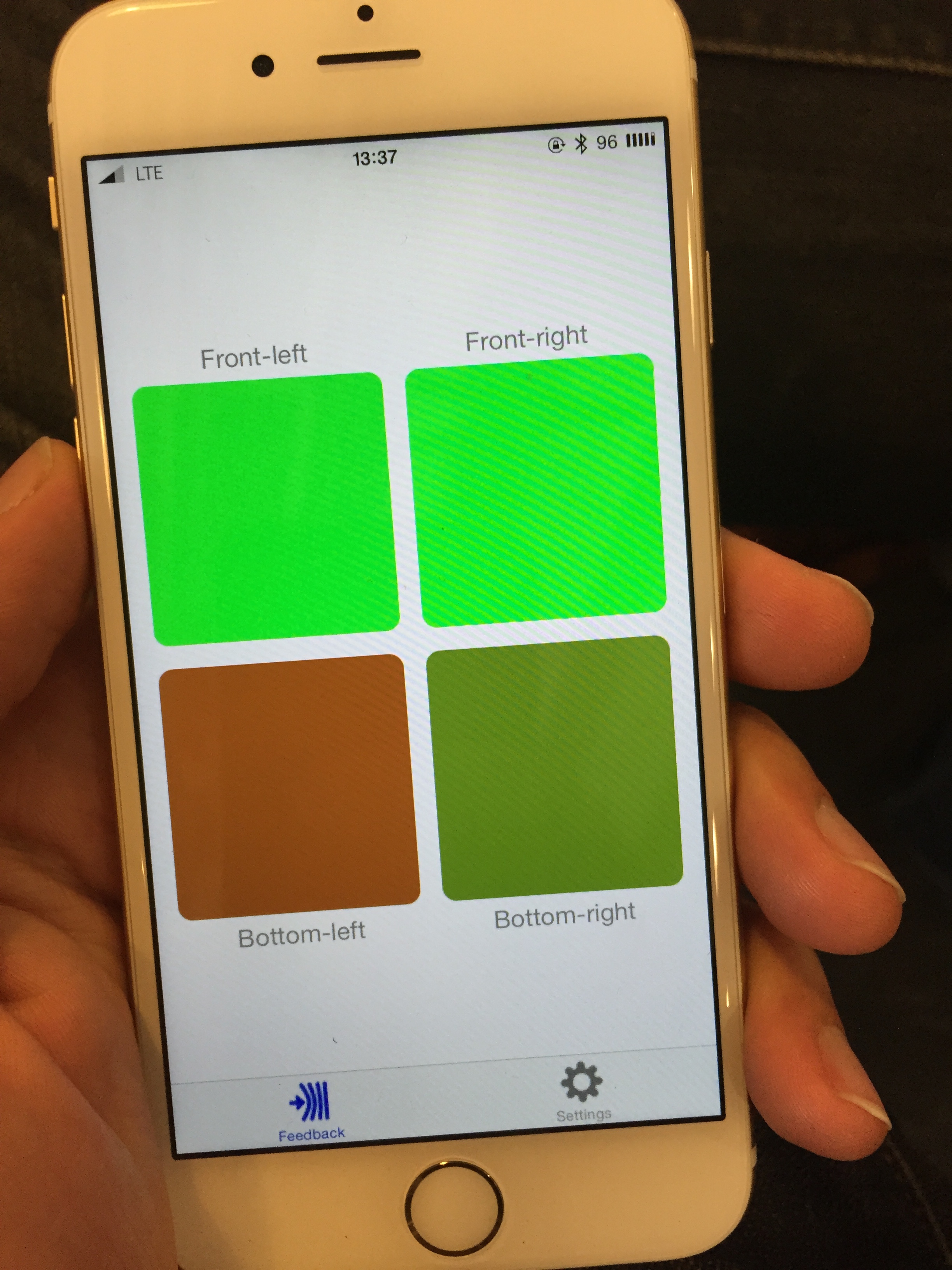
iPhone app links to sensors and alerts users after long periods of sitting. concepts for communicating status and overall “sitting health” to users.
Wrapping Up
The prototype used sensors to alert users or caregivers of excessive pressure through a smartphone app. The device can actively prevent pressure sores by tilting the user’s weight regularly to ensure blood flow to all areas. Initially, this will be used for wheelchairs, but it has the potential for multiple devices to be used to monitor users in hospital beds.
The sprint concluded with presentations to a panel of judges. We were surprised to win two awards!
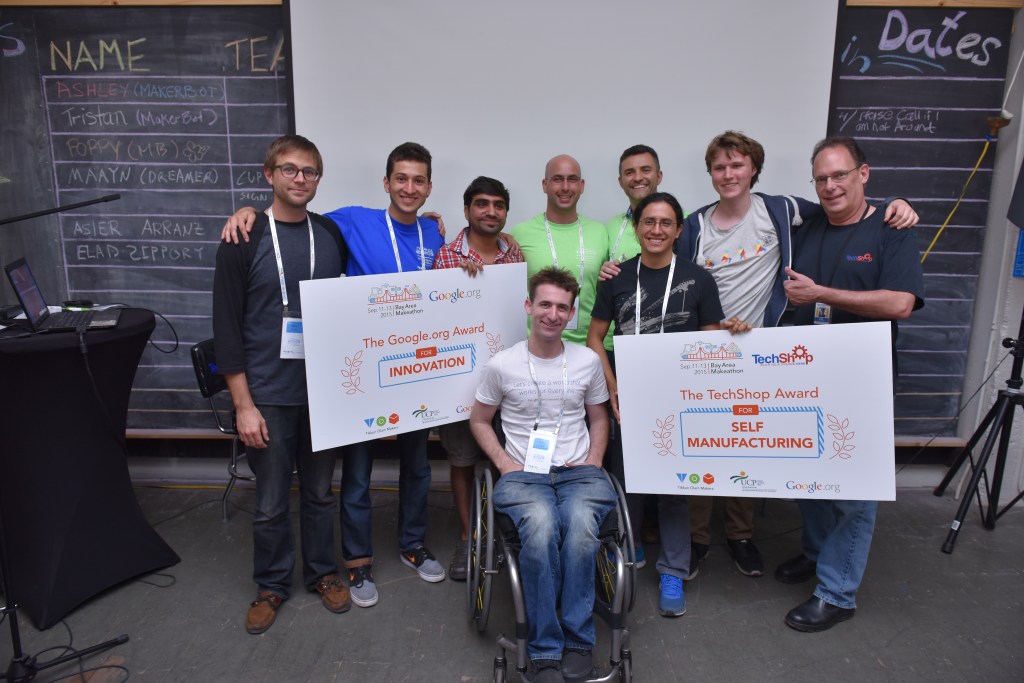
Many thanks to Tikkun Olam Makers, Google.org and TechShop SF for hosting and sponsoring this event for a good cause. Click here to see other projects from the event: https://tomglobal.org/event?id=5ca3885eb506a2297168ad8d

